How ISP Proxies Power Users In Ticket Botting
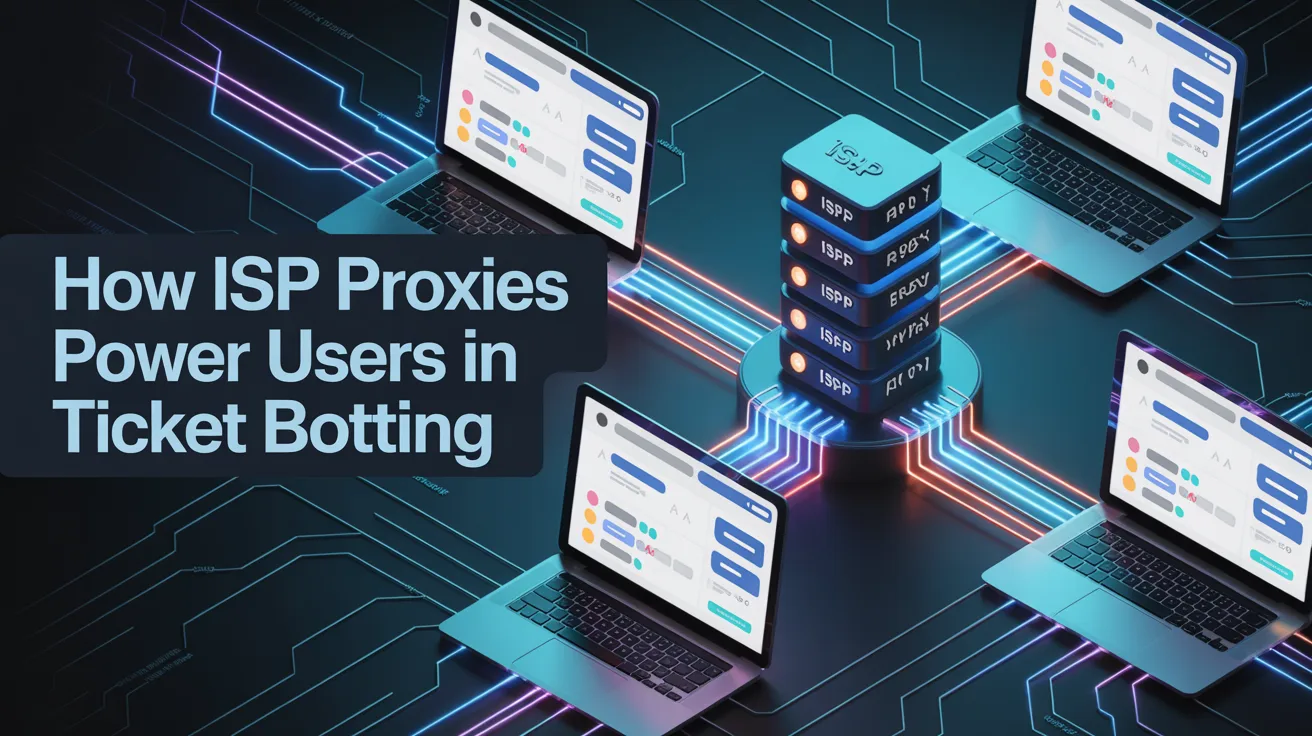
The ticketing landscape in current years is unrecognizable compared to the early 2020s. We have moved past the era of simple “refresh-and-hope” tactics. Today, the battle for front-row seats is a high-stakes digital arms race where the primary weapon isn’t just speed but its identity. With the integration of AI-driven queue management and biometric “verified fan” hurdles, the crude scripts of the past are obsolete. Modern professional “cook groups” (highly organized ticket resellers) now rely on a specific, clandestine tool to bypass multi-billion dollar security layers: ISP Proxies.
What are ISP Proxies?
To understand why ISP proxies are the “gold standard”, we first have to look at the hierarchy of digital reputation. In the early days of botting, users relied on Data Center Proxies. These are fast but easily identified because their IP addresses belonged to server farms like Amazon Web Services or Google Cloud. Ticketing platforms simply blocked the entire “neighborhood” (technically speaking, “ASNs”) of these IPs.
Then came Rotating Residential Proxies, which routed traffic through real household devices (like a smart fridge or a home Wi-Fi router). While these looked human, they were notoriously slow and prone to “rotating”. That means your IP address may change right as you were entering your credit card details, potentially causing a session timeout.
Nowadays, ISP Proxies (also known as Static Residential Proxies) are highly used for ticket botting. These are the ultimate hybrid. They are hosted on high-speed servers in data centers, giving them the raw horsepower needed to win a “drop”, but they are registered under commercial Internet Service Providers like British Telecom, Vodafone and SKY UK. In the eyes of a ticket platform like Ticketmaster or AXS, these IPs look like a standard home user browsing from their living room, despite having the backbone speed of a professional server.
Why ISP Proxies are the Dominant Force?
Anti-bot giants like Akamai and Cloudflare have recently evolved to use Behavioral Fingerprinting and IP Trust Scores. This is why ISP proxies have high likelihood to circumvent these defenses:
1. Low Latency
The “lobby” system for tickets has been optimized to the millisecond. When a high-demand world tour drops, thousands of requests hit the server at once. ISP proxies offer the raw speed of a data center, allowing bots to “checkout” before the site’s JavaScript can even finish loading for a human user on a standard home connection.
2. Reputation Stability
Anti-bot systems now assign a “Trust Score” to every visitor. Mobile and standard residential IPs are often flagged if the device is low on battery or moving between cell towers. ISP proxies provide a consistent, high-reputation identity that remains stable throughout the entire drop. They don’t trigger the “suspicious activity” flags that frequent IP rotations do.
3. Persistence and the “Queue-It” Factor
Modern queueing systems require a user to hold their place in line for sometimes up to an hour. If an IP rotates (common with mobile proxies), the bot loses its session and its spot in line. ISP proxies are static; they hold the session until the transaction is complete, ensuring the bot doesn’t get kicked back to the start of the 50,000-person queue. Not only that they’re static, but because they’re located in a data-center they also have an excellent uptime.
The Botting Workflow: A Deep Dive
You might be wondering how professional botters are actually utilizing these proxies. It is no longer about one person with one script but a distributed cloud operation.
The Setup Phase: Weeks before a ticket drop event, users set up their servers, their bot softwares and purchase ISP Proxies. You can find many providers who offer ISP Proxies. A notable example would be ProxySwag who not only offers heavy discounts on bulk purchases of Ticket ISP Proxies but also provides dedicated IPs which are crucial in botting tickets thereby making ProxySwag a suitable provider for botters.
The Warm-up Phase: A few days before a ticket drop event, bots use those ISP proxies to perform “account warming”. They log into aged Ticketmaster accounts, browse the site, “like” artists, and click on marketing emails. This builds a “cookie profile” that could potentially trick the platform into believing that this is a “real” fan with a history of interest.
The Multi-Browser Assault: Using headless browsers (like Playwright or Puppeteer), a botter will deploy thousands of ISP proxies simultaneously. Each proxy acts as a unique, “verified” human waiting in the digital lobby. A single proxy is assigned to one account and botters operate hundreds or thousands of such accounts.
AI Solver Integration: The most sophisticated bots use ISP proxies to feed site data to AI Solver APIs. These APIs can crack modern “Turnstile” captchas and biometric puzzles in under 1.2 seconds, all while appearing to come from a trusted home IP address.
The Counter-Attack: How Platforms Fight Back
The war is far from over. The ticketing platforms have deployed new hurdles specifically designed to negate the ISP proxy advantage:
| Defense Mechanism | How it Challenges ISP Proxies |
| ASN Filtering | Platforms block or shadow-ban all the datacenter or suspicious ASNs before the drop even begins. |
| IP Addresses Filtering | Platforms maintain massive, real-time databases of known “commercial” ISP ranges used by proxy providers and shadow-ban them before the drop even begins. |
| TLS Fingerprinting | Systems check if the “handshake” signature of the connection matches a standard Chrome or Safari browser or a known botting tool like “SilverBullet”. |
| Device Attestation | This is the newest frontier. Platforms require hardware-level proof (using a phone’s Secure Enclave) that the request is coming from a physical piece of hardware, not a virtual machine in a data center. |
The Ethical and Legal Landscape
The use of ISP proxies for botting remains a legal grey area. While the BOTS (Better Online Ticket Sales) Act has been updated, enforcement is difficult when the traffic is masked by high-quality ISP proxies.
For researchers, this shift highlights a broader, more concerning trend in the digital age: the erosion of the “human” signal. When an AI-driven bot can perfectly mimic the IP reputation, browsing habits, and click-patterns of a suburban home user, the definition of a “fair” sale becomes almost impossible to protect.
We are moving toward a future where “Proof of Personhood” (perhaps via government ID or biometrics) will be the only way to buy a concert ticket, all because the ISP proxy made the digital bot indistinguishable from the human fan.
Conclusion
ISP proxies are the bridge between the server room and the living room. They provide the stealth of a civilian and the power of a soldier. For botters, they are an essential investment; for fans, they are the invisible wall standing between them and the music they love. As AI continues to refine how bots behave, the “reputation” provided by these proxies will only become more valuable in the underground economy of ticket reselling.